
2026 B2B SaaS Price & Value Survey | A Monetization Log Jam
Article written by Garrick Van Buren founder of Pricing From The Start: PricingFromTheStart.com
Log Jam on the St. Croix River Near Taylors Falls, MN

Log jam on the St. Croix River, 1886. Source: en.wikipedia.org/wiki/1886_St._Croix_River_log_jam
“On June 18, 1886, the jam was over 2 miles long, and 400 men were working day and night to clear it, while it was still growing at a rate of 700,000 board feet per hour.”
A similar log jam contributed to the bankruptcy of the Marine Mill saw mill three years earlier.
The B2B Monetization Log Jam Is Here
Product teams are shipping features faster than the commercial teams can monetize them. Right now, half of B2B SaaS companies are giving away expensive new AI features for free. This is creating a wide-spread monetization log jam, as margins are surrendered to minimize customer disruption and product complexity. Three gates are holding back monetization: internal buy-in, buyer predictability, and competitor anchoring.
Three Key Contributors to This Monetization Log Jam:
• Pricing is Stalled by C-Suite and Sales, Not Technical Debt.
• Buyers Want Forecast-ability, Not an ROI Spreadsheet.
• Your Competitors are Pricing Your Product.
About the inaugural Price & Value Survey: Between June 20th – July 10th, 2026, Pricing from the Start surveyed B2B SaaS leaders across industries and stages (N=30). Consider these findings directional, not statistical.
1. Pricing Is Stalled by C-Suite and Sales, Not Technical Debt
The two leading triggers cited for premium product improvements are: 'proactive qualitative research' and having 'built an impressive technical capability'. All told, more than 30% of respondents describe some version of this build-first, price-second sequence. A common story, even before the adoption and incorporation of LLMs.
Half of respondents report incorporating AI features while leaving their pricing model unchanged.

Another 30% report no measurable shift in customer response to their launch of AI features. In short, LLMs have unlocked substantial product velocity without a corresponding effort to recoup the initial investment or the ongoing token costs.
CEO/Founders own pricing 57% of the time with 'No Single Owner/Committee' a distant second at 27%. This isn't unusual given pricing's strategic significance – larger surveys found a similar concentration (SBI 2026 State of SaaS Pricing).

When asked why planned pricing or packaging changes get delayed or cancelled, the top two answers are people: 'Sales or Customer Success pushback' and 'disagreement across executive leadership'. Product and infrastructure constraints combined are just 27% of the delays.
Whether fear of putting revenue at risk, fear of customer reaction, or lack of executive buy-in, this suggests the flood of new features enabled by LLMs are not compelling enough for leadership to champion, or customers to notice. This is the core tension in the monetization log jam.

2. Buyers Want Forecast-Ability, Not an ROI Spreadsheet
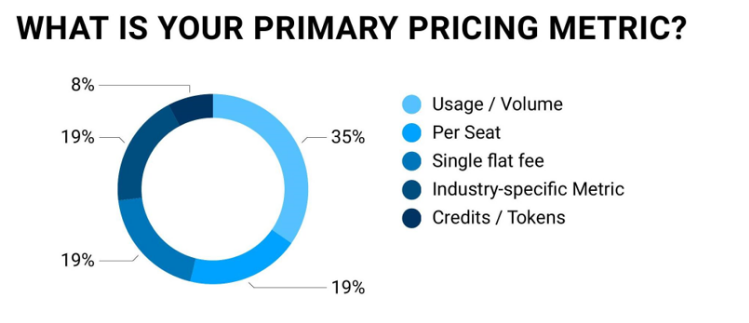
The most popular pricing metric in the responses is usage/volume, followed by per-seat and single flat fee. Even though per-seat and flat fees map poorly to customer value, they are highly forecast-able. Buyers forecast their headcount for the next year, they forecast business volume. They can't yet forecast tokens. The reports of companies burning through LLM budgets unexpectedly fast and surprising overage bills make token/credit-based pricing terrifying.
As the continued popularity of per-seat pricing suggests, a highly granular ROI is not required for a renewal, broad brush strokes are fine. “Are we happy with this?” vibes are sufficient.
Larger studies (SBI 2026 State of SaaS Pricing) have shown buyers perceive difficult-to-forecast pricing models as more expensive.
This want for quiet forecast-ability expands to the entire buyer-vendor relationship.
Buyers are currently rewarding those vendors not requesting their attention. This creates a self-reinforcing market dynamic, where leadership also trusts customers are happy because customers aren't requesting the vendors' attention. Getting the clarity on what's valuable and permission to expand that value is a risky proposition – simply calling attention to yourself may introduce churn risk.
“When things are going well, customers want outbound access to a human on their terms. They don't want incoming messaging from you at all. No quarterly business review. No status-checking emails. No how's-it-goings. No celebrations. Nothing.”
— Chief Product Officer @ <$1M SaaS

3. Your Competitors Are Pricing Your Product
Competitor pricing is the single most-cited reference point for setting price level (30%), ahead of financial impact to the customer's business (27%). Cost plus pricing came in at 20%. A smaller number of responses tie pricing directly to their customers' business impact. This includes pricing against customers' annual revenues, assets under management, or budget levels.
This margin risk introduced by LLM-enablement, along with the challenges of accessing quality competitive pricing information, underlines the importance of shifting toward pricing built on customer business impact.

The Nevers Dam
• Constructed in 1890, 11 miles upstream, for $250K.
• Lumbermen could now control the flow of water & logs on the St. Croix River.
• Result: No further log jams.
Clear your monetization log jam – build a dam.

The Nevers Dam, built 1890 on the St. Croix River.
The B2B SaaS 'Monetization Dam'
The investment in the Nevers Dam gave lumbermen control and consistency in transporting logs to saw mills for commercialization, even at high volumes.
In B2B SaaS, the equivalent control point is pricing against customer business impact rather than competitors or costs. This addresses the three survey findings:
• Pricing delayed by C-Suite and Sales → All features are quantified against commercial value before they ship, not after.
• Buyers optimize for forecast-ability → A business-impact metric gives buyers a number to forecast against, rather than bracing for an unexpected overage charge.
• Pricing anchored to competitors → Pricing aligned to the customer's business and financial outcomes.
About Pricing From the Start
Pricing from the Start (of every feature) helps B2B SaaS leaders architect expansion revenue when:
• AI is changing product value
• Expansion revenue is slowing despite product-market fit
• Pricing no longer reflects customer business outcomes
• Investors are pushing for efficient, profitable growth
Appendix: Survey Participants

Survey participants by title, GTM motion, and industry (colored by company revenue band).


The irony of this report landing the same day the media reported this is not lost on me: "Canva has blamed the rising cost of building products with frontier artificial intelligence models for lengthy product launch delays and a failure to hit revenue targets, as Australia’s biggest technology company hit a speed bump".